
Rogue Toys and Clumsy Jumps: Blasting Through Biomechanical Toy On PS5
Originally released in arcades in 1995 by Gaelco and brought back by QUByte Interactive, this side-scrolling action shooter puts players in control of a ponytail-sporting hero named Inguz. The core premise revolves around entering a magical kingdom where clockwork toys have turned into dangerous biomechanical creatures after a criminal mastermind named Scrubby stole the Magic Pendulum. Players must battle through surreal, busy stages filled with hazards to track down the thief and recover the artefact to restore order.
Specs & HUD | Gameplay | Performance | Settings
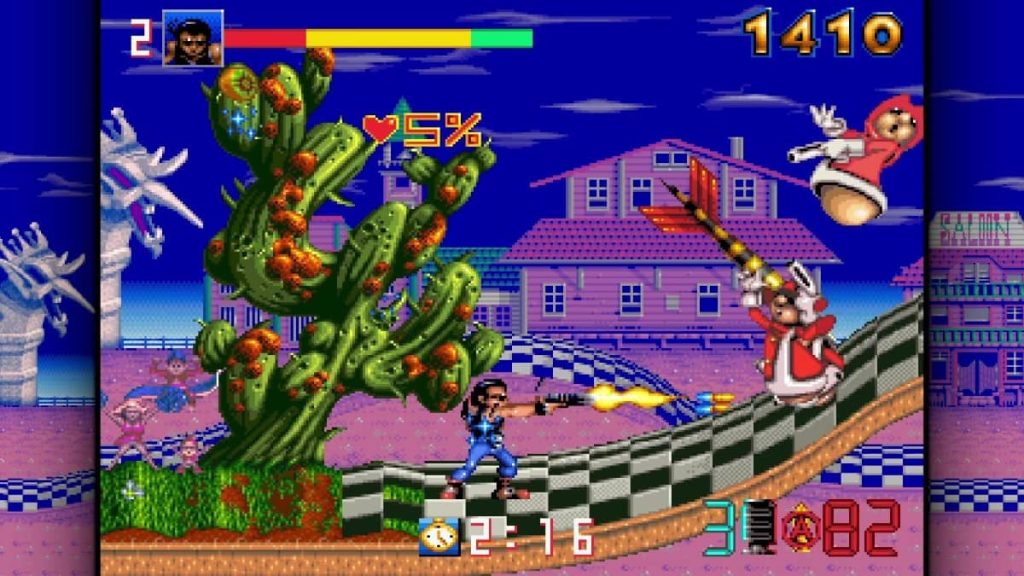
Biomechanical Toy PlayStation 5 Review: Specs & HUD
- Download Sizes: Verifiable file footprints come in at 431.3MB for the native PlayStation 5 version, while the backwards-compatible PlayStation 4 build requires a 658.5MB download.
- Trophy Architecture: The game features a full Platinum trophy list. Because buying the title grants access to both the PlayStation 4 and PlayStation 5 versions, hunters can double-dip to secure two separate Platinum trophies.
- User Assistance & Tutorial: The game includes an in-game manual, using images paired with text to outline the foundational mechanics, game story, and other little tidbits.
- Overlay Features: A modern wrapper is placed over the core arcade emulation, providing instantaneous access to real-time save states across four distinct manual save slots, a standard quit option, and an explicit cheat menu toggle.
Gameplay Review & Mechanics Breakdown
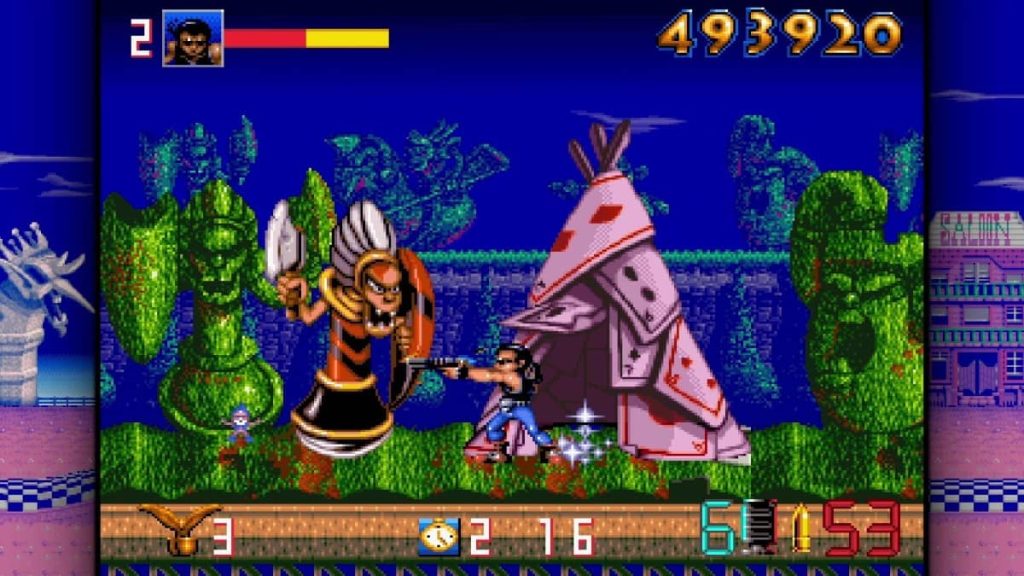
Diving into this 2D side-scrolling shooter instantly slaps you in the face with an aggressive dose of mid-90s arcade energy. You handle the action via traditional platforming setups, jumping across gaps and blasting enemies across highly populated, timed levels that award endgame points based on your remaining seconds. The level design leans heavily into pure, chaotic visual business over true exploration. It is incredibly easy to lose your spatial orientation in the madness, though the developers thankfully tossed in a giant pointing hand asset to nudge you toward the proper path when the screen gets overwhelming. Combat itself relies on a health bar system where scrounging for dropped fruit keeps you alive, alongside cracking open breakable crates to restock your standard ammunition and screen-clearing bombs. A standout mechanic involves freeing caged characters scattered through the maps; rescuing them has them fight by your side with specialised offensive patterns for a limited time. You don’t always know what they are going to do, mind, but it’s always helpful.
The actual feel of navigating Inguz is where the retro friction reveals itself. You can fire in six distinct directions and make use of a dedicated rapid-fire function, but the core design explicitly prevents you from running and shooting simultaneously. This design constraint, combined with the momentum of your jumps, results in a handling model that feels distinctly clumsy and stiff by modern standards. Boss fights attempt to elevate the pacing, shifting into major spectacle events that introduce active environmental hazards like shifting vertical platforms. For players who just want a breezy trip down memory lane, the fully integrated cheat menu lets you toggle infinite ammunition, invincibility, endless extra lives, and specific ammo type overrides. I personally took one for the team to test the parameters, and I can confirm that trophies remain completely active even when you cheese the entire campaign with cheats enabled. Just watch your step during a fifteen-minute speedrun, as infinite health will not save your sprite from instant death if you tumble down a bottomless pit or drop straight into lava. Overall, it’s a fun game with cheats and a bastard hard game without cheats, so everyone is a winner!
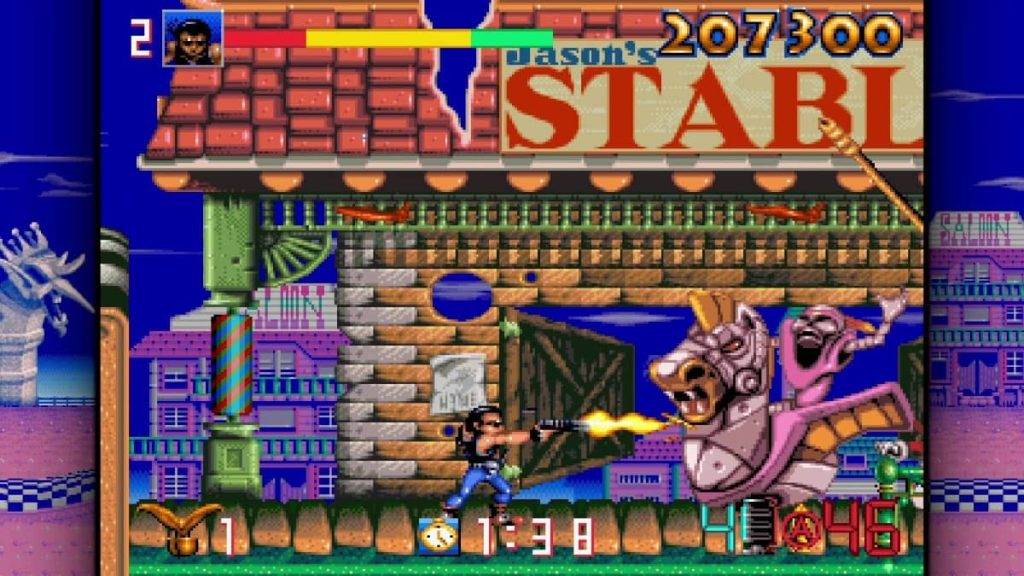
Biomechanical Toy PlayStation 5 Review: Performance & Fidelity
- Frame Rate & Stability: The emulation targets smooth performance, but it encounters localised, authentic slowdowns during heavy combat segments. When multiple explosions detonate simultaneously, the gunfire animations drag into a sluggish tempo, and the player character sprite visibly flashes.
- Visual Presentation: The title utilises a hybrid aesthetic of the era, layering 2D side-scrolling layouts on top of pre-rendered 3D assets for backgrounds, main characters, and standard enemies.
- Display Configurations: The emulation wrapper offers multiple screen modes including standard Stretch/Fullscreen, a scaled Fit mode, and an authentic 4:3 aspect ratio preset.
- Retro Filter Options: Players can toggle between multiple visual filters, including raw Pixel Perfect rendering, a Smooth blending filter, traditional Scanlines, and simulated CRT monitors with or without horizontal slippage.
- Audio Layering: The soundscape relies on a loud, driving 90s synthesiser soundtrack that ultimately gets completely buried beneath the constant, heavy mix of arcade explosions and weapon gunfire.
Settings, Customisation & Control Details
- Input Methods: Players can use either the analogue thumbstick or the classic directional D-pad for movement.
- Button Remapping: The QUByte Classics emulation wrapper features a dedicated control remapping sub-menu, allowing users to freely rebind actions to suit modern controller preferences
- Built-In Cheats Menu: The system menu features a dedicated cheats system where options are all programmed on, and you just toggle them on and off. This includes infinite ammo, invincibility, infinite extra lives, infinite lives, infinite bombs, and a select feature to determine which ammo to use, which are type 1, type 2 or off. Shame it doesn’t say what type means, but whatever.
- System Toggles: The main options menu includes localised language selections, a global Mirror Mode toggle to flip the visual perspective of the stages, and an optional Rewind feature to instantly fix your crap platforming skills.
Related Gert Lush Gaming Reviews
- The Definitive Point & Click Evolution: Gobliins Collection Switch Review
- Rugrats Retro Rewind Collection Review: A Brutal Reality Check
- Forget Big Budgets: CorgiSpace Is The Retro Fix You Need
Biomechanical Toy PlayStation 5 Review
Summary
Is Biomechanical Toy (QUByte Classics) Any Good?
This quirky arcade relic functions as a fascinating, explosive time capsule for fans of old-school coin-op history. The expressive enemy designs look genuinely cool, and the option to call in temporary, rescued toy allies introduces a fun layer of tactical variety to the shooting. Breaking crates for full-screen bombs and tackling the massive boss encounters provides a brief, highly entertaining adrenaline rush. It is a neat little historical curiosity that deserves credit for preserving a lesser-known piece of software, bolstered by modern conveniences like a beautifully illustrated manual and generous checkpointing.
What’s Wrong With Biomechanical Toy (QUByte Classics)?
The physical act of moving and shooting feels distinctly dated, characterised by rigid jumping arcs and an inability to return fire while walking. The screen becomes so intensely cluttered with flashing sprites and projectiles that navigating the environments becomes a lesson in frustration, requiring a giant hand to steer you in the right direction. Furthermore, the emulation struggles under pressure; packing the screen with explosions triggers notable engine slowdown that drags the game into a sluggish, choppy crawl. The generic synthesiser music is entirely forgettable, and the core loop lacks the long-term depth to pull you back in once the initial rush of nostalgia fades.
Should You Buy Biomechanical Toy (QUByte Classics)?
If you want an incredibly easy, fifteen-minute double Platinum trophy fueled by built-in cheats or a quick hit of pure 90s arcade nostalgia, it is worth a cheap look, but don’t expect to stay hooked for long.
