
Diablo 4 Lord of Hatred Is Exactly What Returning Players Wanted
The burning fires of Sanctuary have twisted into something far more sinister, pulling you straight into a dense, decaying world where survival is a brutal, constant grind. The oppressive atmosphere wraps around you the second you set foot into these new regions, showing off a world that feels completely swallowed by corruption and old nightmares. It is a relentless, punishing journey that hooks you instantly with its grim aesthetic, making it clear that the fight for your life is only just beginning.
[Specs] [Gameplay] [Performance] [Settings]
Diablo 4 Lord of Hatred PC Battlenet Review: Specs & HUD
- Download Size: 159GB Download size, which is all the DLC so far and the base game.
- Achievements: New in-game achievements and completion tables.
- Optional Assets: Optional high-resolution assets download.
- Character Slots: Ten character slots. Buy the ultimate editions of expansions to get more.
- Initial Tutorials: The initial missions have more or less tutorial/hint pop-ups, especially showing off new mechanics.
- Prologue Tutorial: Opening Prologue acts as an in-depth tutorial, but you continue to get new pop-ups as you play.
- Auto Pin Objective: I’ll mention it as it’s across both the game and DLC, but the auto pin objective option is a game-changer! Now you can just keep ploughing on with the story without worrying about finding the objective on the map and then clicking back.
- Co-op UI Elements: In Co-op, each player gets a colour dot under their name, and that is what colour their pin and trail are, as you can see every player’s pin line.
- Co-op Pin Sync: In Co-op, if your players have auto pin enabled, it will take from the host’s progress and match it.
- Custom Navigation: The map and icons uncover as you explore, and you can place your own custom markers with navigation lines, do it at a party, and everyone sees it.
- In-Game Tracking: Own in-game achievements with new ones added for all extra DLC and expansions.
- Lore Logging: A lot of optional lore can be found around the world, from text to signs to audio logs. They all get registered, so you can re-read or re-listen to them.
- Custom Emote Wheel: An emote wheel that can be customised. You can add actions, sayings or items to them and have multiple wheels.
- Dungeon Shortcut: Handy leave dungeon entry in the emote wheel. Or just go old school and portal out.
- Town Portal Mechanics: The town portal is back and allows you to return to town, and this time you have a shield as standard, meaning it’s uninterrupted by enemy attacks. You can and will unlock and earn many different ones, and they do look fantastic.
- Fast Travel Setup: Fast travel points can be found in each town.
Gameplay Review & Mechanics Breakdown
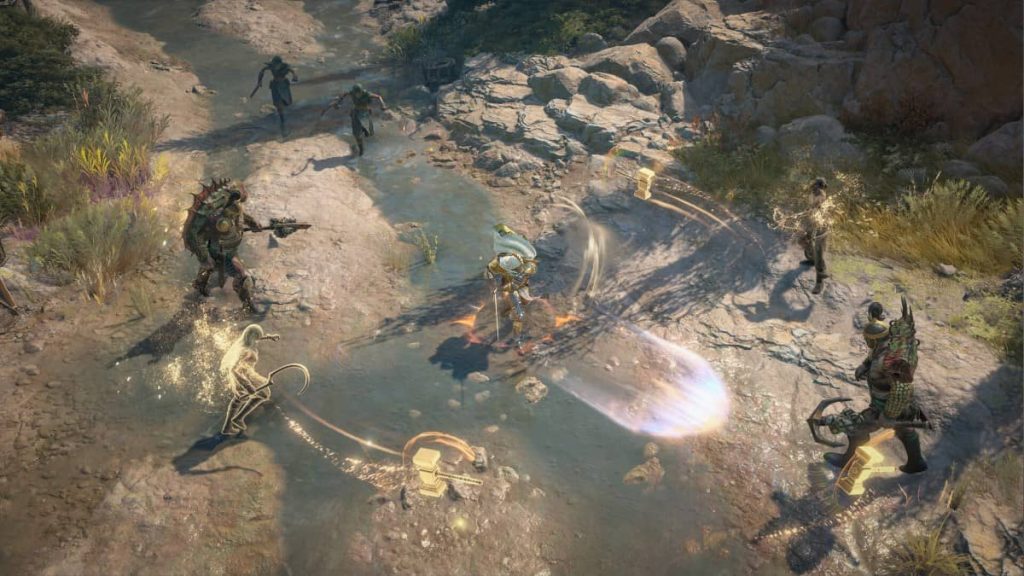
Play the whole game how you want because it’s a world that encourages exploration and is so much fun to do; you never really know what you are going to find out there. The core action RPG gameplay hits an absolute peak here, and the Lord of Hatred DLC brings a lot of nostalgia with old faces and items making a comeback like the Horadric Cube from Diablo 3. The Horadric cube lets you use recipes to do powerful things like turning items into uniques or legendaries, taking out abilities and putting them in other items, and even re-rolling sets and charms. The main story acts all show up initially, so you can kind of tackle them how you want, but DLC-wise, this isn’t the case, and you do them in order. The DLC stories are really good and do continue the story and reference previous events with brilliant new memorable characters that aid you on your journey. The biggest addition is the brand new Spiritborn class with eight presets for the character creation, though you can do further customisation. The new class Spiritborn is a real game-changer and plays differently from most other classes. I like how the different animal essences your Spiritborn uses are colour-coded to help you keep to the one essence, though you are free to mix and match. As you hit level 20 as Spiritborn, you do a special one-off quest, the Spirit Hall, which delves into the Spiritborn class. You learn the origins and unlock passive skills, which again can be changed. The Spirit Hall event can be played in co-op online. As is always the case, learning a new character takes a long time, but a new skill tree for your new characters lets you refund points and sell back certain unlocks at will and quite readily. You can also pay gold to respec your character by getting all your skill points back or individual skill points if the flow of the skill tree allows it. The new level cap is 70, and it goes quite quickly, honestly.
The new area called Nahantu looks fantastic, from the above-ground jungle world to the underground tombs and dungeons. It has the jungle theme throughout and fits right into the world of Diablo 4, but Nahantu has to be discovered and revealed to open it up. You get the map bonuses for this like before, so extra potion uses, bonus exp, and other boosts for discovering everything. There are many secrets and points of interest to find in the Nahantu region, and Nahantu is not just a jungle mind; it has corruption washed over it that makes it look spectacular, but also brings in other enemy types. New mechanics and vendors unlock as per your level, which helps ease you in and can really open it all up, like the ability to add in new buffs or swap buffs, reroll for better stats, etc. All loot and items/materials have rarity levels, and each item can be the same but have different stats or buffs assigned to it. Whites drop at all levels, which feels annoying, but you can use them now to turn them into a unique item, so I’m guessing it’s another way to get more power. Resources are more focused now, so you need to farm animals and creatures for set resource drops, break stones for ore and pick flowers, etc. It will be for crafting and rerolling, but I have found that a lot of them now give veiled crystals, which are very handy for socket play. You can rip out an Aspect (power or buff) from a legendary and use this to add a socket to an item. Another way to add sockets is to pay for and use veiled crystals to add sockets. Full Gems support again, where socketing a gem into a weapon or item/armour can add passive buffs, and you can craft better gems to improve the buff stats. The gems have changed what they do since launch, so returning players should check. When breaking down/dismantling items at the Blacksmith, you get a handy icon to show what can be broken down and a button to do all of that rarity in one go. Equipment has durability that goes down upon death; you can repair it at a blacksmith. If you die and someone revives you, then you don’t take the durability hit. Weapons can eventually break, and you do next to no damage. When you break an item down, you get it as a transmog so you can give the appearance of that item, but have a different one equipped. Customising your character is now bigger with every item transmoggable and each having a set amount of colour palettes, plus it’s free, so you can do it whenever. You will unlock new items and clothing options by playing. Mounts can be unlocked and are used for faster travel, allowing you to jump off them and attack. Some are randomly found, some are rewards, and a lot of them are real money purchases. You can not only use your mount in town, but you can also use your speed boost now.
The game feels a lot more complete now, I wouldn’t say finished, as it could always do with events, updates, and better reliqueries, as they are bad and not worth it. A lot of quality of life improvements, like the whisper tree in major towns, quick travel options to places like the den, rather than finding them on the map and clicking it. A much more living world feels with animals free roaming and enemies roaming around rather than waiting. Obviously, you also have other players and npc from towns or kingdoms roaming. Many different chest types, including some that need a particular key, and some that need to be purchased with in-game currency. Clan support is complete with name and banner options. You have a separate menu to manage it all, a rolling activity board telling everyone about what members have done or found. Blizzard does time-limited events and sprinkles in one-off timed reliqueries which is their version of a battle pass. It still bums me out that cool cross-over events always happen on the Diablo Immortal game, but not this version, or it gets watered down. Lillith Altars are in set places, and there is a set amount; they give a permanent buff or stat increase to your character. Found ones will show on your map at all times. Pylons randomly spawn and give a time-limited buff like higher damage or a shield, etc. They are still not as good as Diablo 3, and they are not as varied or powerful or fun as before. Strongholds are self-contained events where you have to do many little steps that lead up to a big boss fight, once conquered you uncover a chunk of the map and get a new town or other such reward. Treasure goblins are back; they are harder to kill, faster, have better loot, and show up on the map. Unfortunately, it’s not the wide range of goblins; it’s better than at launch, but you cannot get the pet dropping goblins, for example. Many, many optional side quests show as blue exclamation points, or you may stumble across someone who needs help, alongside an additional side quest variation where you get an item and the set area to explore and do actions in and then return the item. All vendors show different stock and have a timer to show when the stock gets refreshed. They have gotten a refresh as they can sell legendary and loot worth buying even in the higher ranks. Fishing is now in the game, and it has an introductory set of missions, and then it has its own entry in the challenges menu so you can catch all fish, catalogue them and sell duplicates. Still has a lot of missions that are just standing here and fighting waves of enemies for very little payoff, alongside a lot of self-contained sequences.
So many new endgame modes mean you have a reason to keep playing and show off how the DLC and main story are just the beginning. Massive boss encounters from in-set pieces to the open world are the true highlight, and they give better loot, featuring amazing-looking bosses and new enemy types from all the DLC expansions. Bullet sponge boss fights are annoying anyway, but here they do that and add in ones that disappear and go invulnerable to tedious builds. You never get a screen saying the DLC is complete. Sightless Eye is a wave-based event you get after finishing the DLC. You go in, and each wave gets progressively harder; you play until you lose. Periodically, it will put a treasure goblin in, so you get a cache at the end. It’s a great little test your might type experience. Mercenaries can be unlocked, and this is an old Diablo 3 mechanic. You can (when playing solo) hire a mercenary to play alongside you; each offers unique abilities and attacks and can buff you. Each mercenary is unique, but you have to do a quest to recruit each one. Reinforcements is where you can add a mercenary’s ability to one of yours, so the move or ability will do two things; also, your mercenary earns exp when used like this. War plans is the new endgame addition, and it’s a place where you set up x amount of events from the list and then do them one by one. It makes farming more efficient, and you have a teleport button to jump between them. War Plan is not only efficient, but you level up each of the activities as you do them, and then spend points on the skill trees to change up how they play, like add in new enemies or have harder bosses, fewer enemies, and so much more. It just makes the game feel more varied and adds a ton of replay value. The Pit of Artificers is a new endgame mode. You need to kill enemies within a time limit to trigger the boss fight; it is like an updated take on the Rifts system in Diablo 3. The Pit is another event you can do, you push the difficulties and unlock new ones, you are up against the time as well as the enemies and boss and at the end of the run, you get x amount of chances to upgrade your glyphs that you can put into your skill tree boards. You can do more upgrading and customising with your Paragon glyphs and use nightmare modifiers for the Pit of Artificers. Zakarum remnant is a separate faction that you level up by collecting fragments from Realmwalker portal events, but the Zakarum Remnant activity is just a re-skin of the last time they did this with the Wolf camp. The Undercity gets unlocked and is a new high-replayability activity whereby you have to light braziers and kill enemies, all whilst the timer goes down, killing elites and certain bosses can reward more time. A loot chest is given at the end, and you level it up by killing enemies.
Diablo 4 Lord of Hatred PC Battlenet Review: Performance & Fidelity
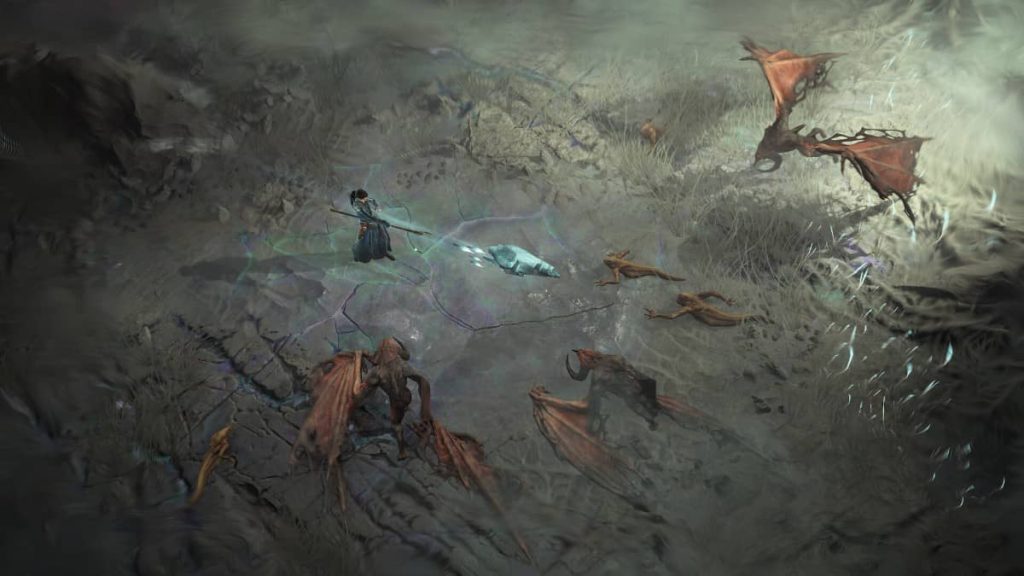
- Graphics Quality: Amazing graphics. The darkest yet most beautiful graphics.
- Atmospheric Lighting: The lighting makes the game so atmospheric and adds a lot of atmosphere and depth to the grim world.
- Cinematic Set Pieces: Cutscenes still look like a top-tier movie; you also get in-game interactions and set pieces. Really memorable set pieces and sequences. You can skip and fast-forward them if you like.
- Soundtrack: Powerful, memorable soundtrack.
- World Event Spawns: Events and world boss sequences can spawn in the area, and anyone can join and take part for Rewards.
- Panoramic Spots: Panoramic spots can be interacted with, and these give you a glorious flyover. They didn’t add any of the Lords of Hatred spots to this, which is a huge bummer, as they were impressive.
- Severe Lag & Pop-in: Lag is very bad; built-up areas mean objects and enemies wouldn’t spawn in, or they would just pop in. I know it’s because it’s new, but it makes the experience really rough.
- Server Performance: Cutscenes can lag or take a while to get going, but it could be server issues.
Settings, Customisation & Control Details
- Graphics Settings: Display, adapter, monitor, resolution, sharpen image, font scale, cursor scale, HDR, v-sync, limit cutscenes FPS, lock cursor, peripheral lighting, brightness slider, and colour blind filter.
- Performance Settings: Resolution percentage, NVIDIA DLSS, frame generation, max foreground FPS, max background FPS, NVIDIA Reflex low latency.
- Quality Settings: Preset including custom, anisotropic filtering, shadow, dynamic shadows, soft shadows, shader, SSAO, fog, clutter, fur quality, water simulation, anti-aliasing, geometric complexity, terrain geometry detail, physics, particles, reflection, screen-space reflections, distortion, and low FX.
- Mouse & Keyboard Rebinding: Can remap controls for the mouse and keyboard, with handy shortcut buttons on the keyboard.
- Controller Options: Full controller support with handy shortcut buttons on both the keyboard and the controller. Controller settings – swap sticks, inner dead zone, outer dead zone, and sensitivity slider. You can assign shortcuts to your own button layouts and edit them.
- Accessibility Tools: Accessibility for a screen reader and/or text-to-speech. Edit the colour of all visual text types.
- Character Customisation: Customising your character is now bigger with every item transmoggable and each having a set amount of colour palettes, plus it’s free, so you can do it whenever. You will unlock new items and clothing options by playing.
- Real Money Transactions: In-game shop for real money purchases on a rotating time window. Occasionally, you get free stuff, and it is very expensive, so prepare yourself.
Related Gert Lush Gaming Reviews
Diablo 4 Lord of Hatred PC Battlenet Review
Summary
Good Stuff
The Lord of Hatred expansion drops a massive pile of new endgame modes that completely transform the late-game loop, giving you a massive reason to keep playing well after the main story acts are done. Nostalgia hits hard as this DLC brings back old faces and iconic legacy items like the Horadric Cube from Diablo 3, allowing you to run powerful recipes to upgrade gear into uniques, swap traits, and re-roll your builds. The single-player experience gets an incredible boost with the newly introduced Mercenary recruitment quests, letting you hire unique sidekicks that pack special attack trees and a clever Reinforcements mechanic that binds their moves to yours for double the damage output. Farming becomes incredibly efficient thanks to the brilliant new War Plans system, which lets you stack activities to change enemy behaviours, spawn mechanics, and boss variables to maximise your loot efficiency. On top of that, the expansion layers in a wave-based survival test via the Sightless Eye and timed loot gauntlets within the Undercity create an excellent suite of endgame activities to complement the upgraded Pit of Artificers. The presentation across the expansion content is top-tier, delivering the darkest yet most beautiful graphics to date with incredible atmospheric lighting, memorable cinematic set-pieces, a powerful soundtrack, and massive world boss events that draw the community together.
Bad Stuff
The Lord of Hatred expansion suffers heavily from major live-service hurdles and severe technical performance problems that drag down the entire experience. Severe lag ruins the immersion in built-up locations, leading to massive visual pop-in where environment objects and enemy packs fail to spawn in on time. Cutscenes look jaw-dropping, but frequently lag out or struggle to get moving because of ongoing server stability issues on the Battle.net platform. The main progression is dragged down by tedious wave-defence side missions and annoying bullet-sponge boss mechanics where major targets go completely invulnerable, dragging fights out for far too long. The Zakarum Remnant progression tier feels completely uninspired as it is just a lazy re-skin of the old Wolf camp faction system, and the live-service timed reliqueries are bad and simply not worth your time. It is a massive bummer that none of the breathtaking new expansion vistas was added to the interactive panoramic viewpoints, and the game still refuses to provide any build guides or tutorials to ease you into the massive endgame reworks. Furthermore, the heavily pushed real-money cosmetics shop is incredibly expensive, and the expansion drops the ball narratively by never giving you a clear completion screen when the DLC campaign actually wraps up.
Final Verdict
The Lord of Hatred expansion makes Diablo 4 feel like a vastly more complete experience, serving as a massive wake-up call that proves the base campaign was only just the beginning. The addition of customizable War Plans, solo mercenary levelling, and the chaotic survival gauntlets inject a phenomenal level of replayability into the endgame loop. However, the experience is severely held back by atrocious server lag, frustrating invulnerability phases during major boss fights, and a re-skinned faction grind that lacks creativity. It is an absolute blast to play when the technical side behaves, but because the game leaves you completely in the dark regarding build synergy, do yourself a favour and check out Icy Veins for the definitive guides before diving into the high-tier difficulties. Gauntlet of the Sightless Eye, the timed loot rushes of the Undercity, and the Pit of Artificers, where you push difficulties against the clock to upgrade your Paragon glyphs. Massive quality of life additions like full controller rebinding, dead zone sliders, free character transmogs, fishing challenges, and the incredible auto pin objective option make exploration an absolute blast.
