
Majogami Unfolded: Slice, Serenade, and Survive the Craft Witch Curse
Majogami doesn’t just ask you to fight, it dares you to slice through memory itself. From the moment Shiroha unsheathes her katana “Kamikiri,” the game plunges you into a surreal paper-crafted realm where divine witches rule and every cut reveals a sliver of forgotten truth. This in-depth exploration of Majogami’s high-speed Setsuna combat, Astral transformations, and haunting narrative threads offers a visceral journey through loss, identity, and beautifully animated vengeance. If you’ve ever wanted to cleave gods in two while singing your soul back together, Majogami is your stage.
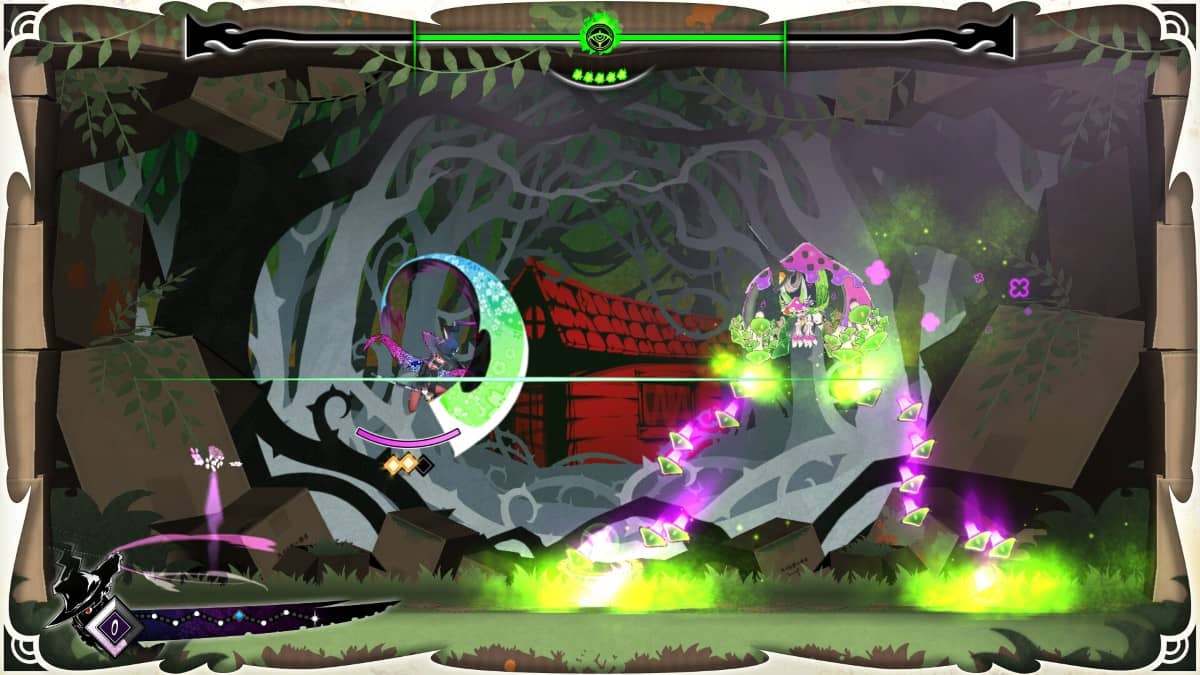
Majogami Review Pros
- Beautiful cartoon graphics.
- 4.7GB Download size.
- Japanese voice as standard with English subtitles.
- Opening tutorial section that also acts as a story opener before going into the game menus.
- Display settings – brightness slider, and display mode (performance/graphics/light).
- Set your preferred confirm and cancel buttons – normal A/B or reversed B/A.
- You can remap the controls.
- Gameplay settings – HP display, magic paper display, target cursor behaviour, direction balance, target assist, piercing jump cancellation, support display, and rumble on and off.
- Five save slots.
- Action slasher gameplay.
- Opening tutorial, as said, along with pop-ups as you play, and you have a central help menu.
- In-game cutscenes and character interactions can be skipped or set to auto-play.
- Three game difficulties – Easy, normal, and hard, and this changes enemies’ strength, your health bar, level choices, etc.
- Level select menu system, and you can replay completed levels and see your best clear time for each difficulty, and collectables percentage.
- Magic lanterns, when destroyed, give you magic paper. Phantasmal mirrors restore HP depending on the mirror size, and Konoha is the currency used in the game.
- Find and open treasure chests.
- Awesome 3D backgrounds and locations.
- Find and interact with magical sigils which can change the level in many different ways.
- What you collect pops up next to your character.
- Fast loading times and location transitions.
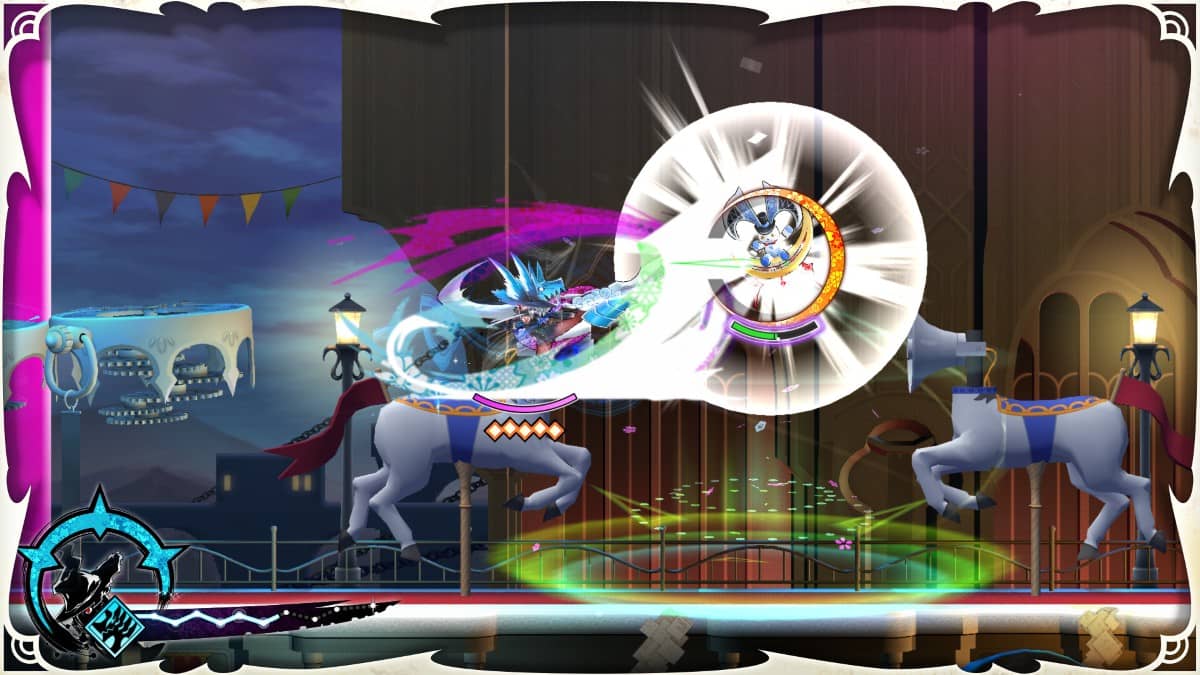
- Setsuna is where you can lock onto an enemy and fly and slash towards them. You can chain kills together for a combo, but also use this to hit an enemy and get to higher ground.
- Enemies can vary in not just how they attack you, but they can have mist around them, which means you have to do certain attacks or combos in order to defeat them.
- Topic seedlings can be found, and these give bonus sub-episode conversations.
- The controls are very tight and combat feels really good, even better when you nail how to combine attacks and do combos, you dance and slash across the screen in a deadly yet majestic way.
- End of level breakdown showing clear time.
- All levels have many secrets and routes to find, especially when you use enemies to go higher.
- The whole game style is one of paper, enemies, and you look like Origami; the level select is within a book, and so much more.
- The shop unlocks and you visit it between levels, and you can buy items, charms, scrolls, white, owl, and there is a recommended section.
- Scrolls give you jew abilities and can be found, earned, and bought from the shop.
- Before going into a level, you can go into the prepare menu and equip items and the like beforehand.
- You can go into conversations within the book to reread or listen to previous conversations.
- White Owls are very handy, as you buy them and equip them to go into a level, and you get an Owl that flies ahead of you and shows you where rare treasure is hidden.
- Massive boss battles each usually have a unique twist for each fight.
- You can see your and then enemies’ health bars at all times.
- Find Tomes of Trials to unlock new trials for awesome rewards.
- You will see semi-circles on enemies. Don’t panic, this is more to tell you which direction they are fighting in, and some enemies have to be hit from behind.
- Set pieces can happen, like wave-based enemies attack, then a small mini boss, or it could be platforming sections.
- Talismans can appear, and you have to get these guys first, as they protect all other enemies on the screen.
- It’s a game that is a lot of fun to play and is a good workout, especially for the thumbs.
- The game’s difficulties can be changed before a level each time.
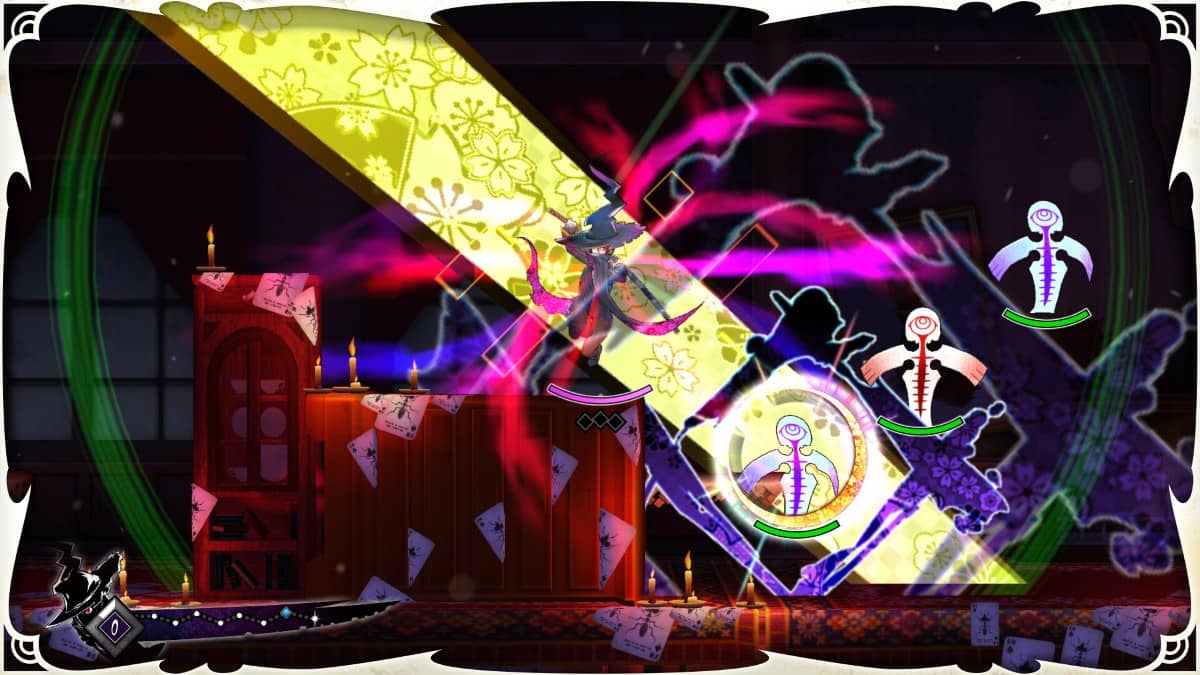
Majogami Review Cons
- The performance and graphics display options are for TV mode only; luckily, they tell you that.
- It’s a very busy screen most of the time, and it can make chaining or seeing possible chains a bit of a pain.
- No touchscreen support.
- Combat can be very button-mashy.
- I found I didn’t always know what platforms I could drop down from safely, more because you have no camera control at all.
- There is no Colourblind support or help with text, etc.
- It takes a while to get going in terms of the new scrolls you get really open up the repetitive combat, but it’s just slow.
- There is no solid save or save and quit option.
- No English voice option, this is an FYI more than anything.
- There is no in-game achievements system. Again, not really a bad thing, but more an FYI.
Related Post: Yooka-Replaylee Unboxed: Tonics, Twists & Tails |
Majogami
Developer: INTI CREATES CO., LTD.
Publisher: INTI CREATES CO., LTD.
Store Link:
Majogami Review
Summary
Majogami – The Thrills and Highlights of Gameplay:
Majogami throws you into a surreal origami-styled realm where slicing through memory is just the beginning. With Shiroha’s katana “Kamikiri” in hand, you dive into high-speed Setsuna combat, chaining kills mid-air and unlocking Astral transformations. The game’s action slasher roots are backed by tight controls, combo-rich mechanics, and a level select system that lets you replay stages, chase collectables, and tweak difficulty. From treasure-chest hunting to magical sigils that reshape levels, Majogami keeps the gameplay fresh with boss battles, platforming set pieces, and a shop full of scrolls, charms, and White Owls that guide you to rare loot.
Majogami – Where It Falls Short: Key Negatives:
While Majogami dazzles with style, it stumbles in a few areas. The performance and graphics settings only apply in TV mode, and the screen often feels cluttered, making combo chains hard to spot. Combat leans into button-mashing early on, and the lack of camera control makes platforming awkward. There’s no touchscreen support, no colourblind options, and no solid save-and-quit feature. English voice acting is absent, and while not a dealbreaker, there’s no in-game achievement system to track progress.
Majogami – Immersive Story and Narrative Elements: Majogami doesn’t just tell a story; it sings it. Each slash reveals fragments of forgotten truth, and the haunting narrative threads explore loss, identity, and vengeance. Topic seedlings unlock bonus sub-episode conversations, while the book-based level hub lets you revisit past dialogue and deepen your connection to the world. It’s a tale of divine witches, memory shards, and slicing through the soul to find what’s been buried.
Majogami – Visual and Performance Aspects:
Visually, Majogami is a stunner. Its cartoon graphics and origami-inspired design give every level a handcrafted feel, with fast transitions and slick animations. The 3D backgrounds pop, and the paper-crafted aesthetic runs deep from enemies to menus. Despite the visual flair, the lack of touchscreen support and limited display options in handheld mode hold it back slightly, especially for players seeking full flexibility.
Majogami – Overall Verdict: Is It Worth Playing?:
Majogami is a stylish, soulful slasher that rewards precision and exploration. It’s packed with secrets, layered combat, and a narrative that cuts deep. While it has a few rough edges, especially in accessibility and UI, it’s a satisfying workout for the thumbs and a visual treat for fans of fast-paced action with a twist of magic and memory.
Back of the Box Quotes:
“Chain your combos, cleave your past, Majogami is your stage.”
